
Decoding Crypto Seven-Letter Words
May 17, 2026
Thirteen Six-Letter Crypto Terms
May 17, 2026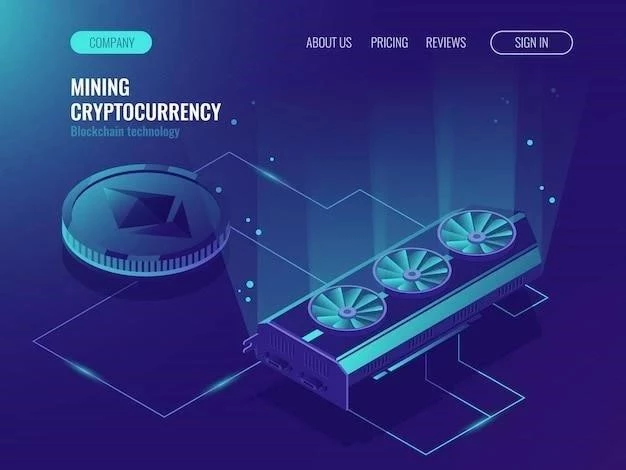
A crypto mining machine, often called a “miner,” is a specialized hardware device designed to solve complex computational puzzles․ Its primary purpose is to validate transactions on a blockchain network, contributing to its security and decentralization․ In return, successful miners are rewarded with newly minted cryptocurrency and transaction fees․ This process, known as “mining,” is fundamental to the operation of many cryptocurrencies, most notably Bitcoin (BTC) and Ethereum (ETH) before its switch to Proof-of-Stake․
Types of Mining Hardware
The evolution of crypto mining has seen several generations of hardware:
- CPU Mining: Early Bitcoin mining was possible with standard Central Processing Units (CPUs)․ Today, CPU mining is generally inefficient for most major cryptocurrencies due to low hash rates and high power consumption relative to other methods․
- GPU Mining: Graphics Processing Units (GPUs), originally designed for rendering graphics, proved significantly more efficient than CPUs for mining due to their parallel processing capabilities․ GPU “mining rigs” consist of multiple graphics cards working in tandem and are still popular for mining various altcoins․
- ASIC Mining: Application-Specific Integrated Circuits (ASICs) are purpose-built machines designed to mine one specific cryptocurrency algorithm with unparalleled efficiency․ ASICs offer vastly superior hash rates and energy efficiency compared to GPUs for their target algorithm (e․g․, Bitcoin’s SHA-256)․ However, their specialization makes them less versatile, facing obsolescence if the algorithm changes․
How They Work: Proof-of-Work
Mining machines perform billions of calculations per second to find a “nonce” – a random number – which, when combined with transaction data and the previous block’s hash, produces a new hash that meets specific network requirements․ This process is known as “Proof-of-Work” (PoW)․ The first miner to find this valid hash broadcasts it to the network, and if verified by other nodes, a new block is added to the blockchain, and the miner receives the block reward and transaction fees․
Key Considerations for Mining Machines
- Hash Rate: This measures the machine’s processing power, typically in hashes per second (e․g․, TH/s for ASICs, MH/s for GPUs)․ A higher hash rate increases the probability of solving a block and earning rewards․
- Power Consumption: Measured in watts, this is a critical factor as electricity costs directly impact profitability․ Efficient machines deliver high hash rates with lower power usage, crucial for operational sustainability․
- Cooling: Mining generates significant heat, requiring robust cooling solutions (e․g․, multiple fans, liquid cooling systems) to prevent overheating, maintain optimal performance, and prolong hardware lifespan․
- Initial Cost: Hardware investment can be substantial, particularly for high-end ASICs or multi-GPU rigs, influencing the return on investment timeline․
- Noise: Powerful fans in mining machines can produce considerable noise, a practical factor for home miners, often necessitating dedicated spaces․
Setting Up & Profitability Factors
Setting up involves assembling hardware (for GPU rigs), installing specialized mining software, and typically connecting to a mining pool․ Profitability is a dynamic calculation influenced by electricity costs, the cryptocurrency’s market price, network difficulty adjustments, and the machine’s hash rate and energy efficiency․ Many miners join “mining pools” to combine their hash power and share rewards more consistently, reducing variance․
The Evolving Future of Mining
The industry constantly evolves, with a strong focus on more energy-efficient hardware designs and integrating renewable energy sources for sustainability․ Cloud mining, where users rent hash power from large, professionally managed data centers, offers an alternative to owning and managing physical machines, democratizing access․ As blockchain technology matures, the role and design of mining machines will continue to adapt to network requirements and environmental considerations, pushing innovation in hardware and operational models․